

Research
Overview
We aim to restore and enhance brain function by constructing new neural circuits that bypass damaged brain regions, rebuilding neural circuits disrupted by neurological disorders, and creating neural circuits that do not naturally exist in the brain. A key feature of our research is that we seek to understand brain function not only by observing the activity of existing neural circuits, but also by constructing new neural circuits. By combining tissue engineering and in vivo calcium imaging, we aim to develop new approaches to restoring and understanding brain function through neural circuit construction.
Students can participate in research aimed at constructing new neural circuits and understanding their functions through the production and transplantation of directional neuronal fibers and in vivo calcium imaging.
The brain performs a wide range of functions through networks of neural circuits connecting different brain regions. Our laboratory aims to develop technologies for producing directional neuronal fibers using tissue engineering techniques and transplanting them into the brain to construct new neural circuits. Through these approaches, we seek to restore and enhance brain function.
Research theme
01 Neural Circuit Reconstruction for Brain Recovery
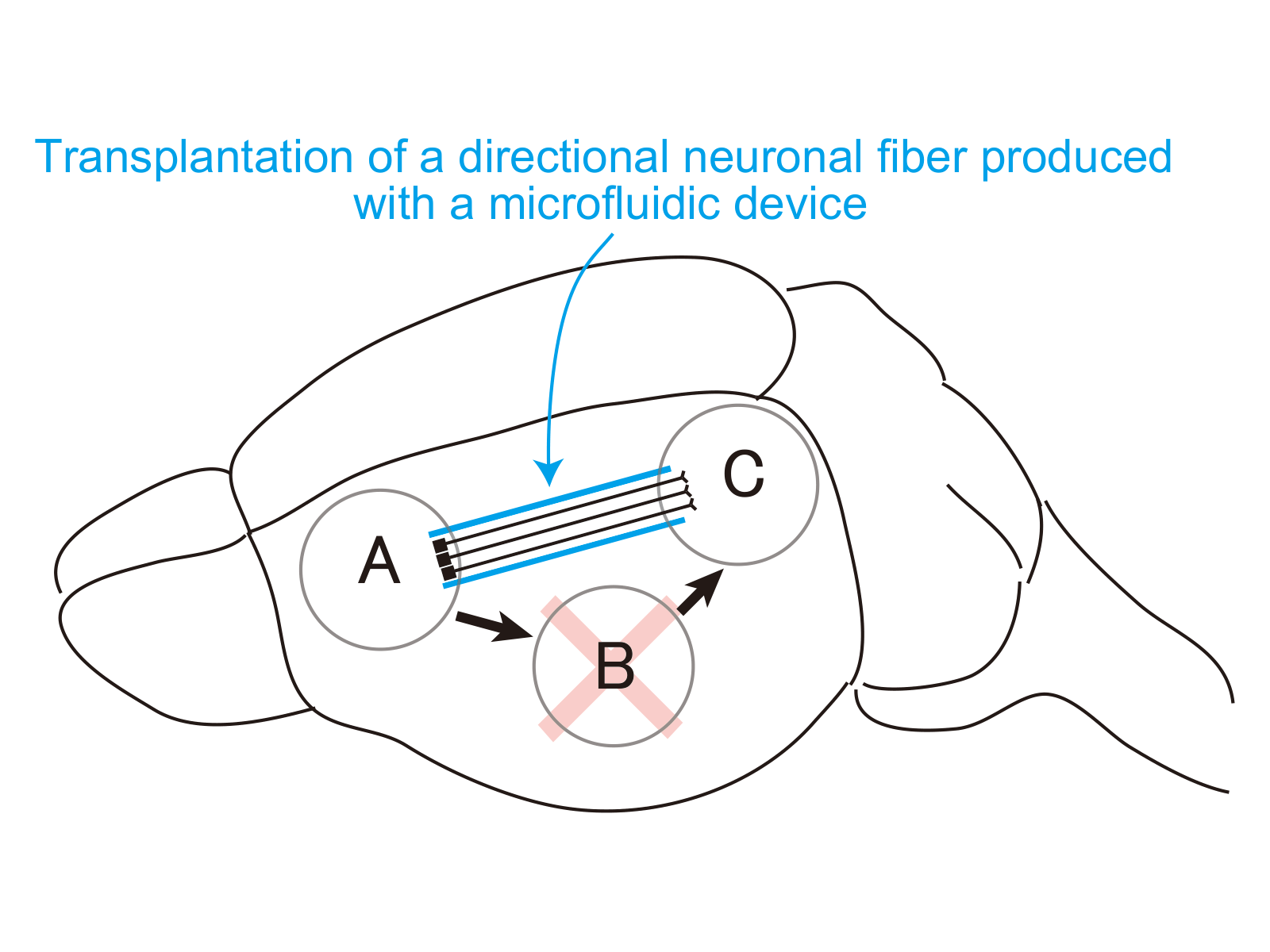
Brain injury and neurological disorders can disrupt neural networks connecting different brain regions, leading to impairments in a wide range of brain functions. We believe that regenerative medicine targeting neural circuits between brain regions could lead to new therapeutic approaches for brain dysfunction. Previous basic research on treatments for brain disorders has primarily focused on transplanting suspensions of neural stem cells or neurons into damaged brain regions. In contrast, methods for transplanting directional neuronal fibers into the brain remain poorly established.
We aim to develop technologies for transplanting directional neuronal fibers into the brain to reconstruct neural circuits lost due to injury. In the future, we hope to advance neural circuit-level regenerative medicine by creating bypass pathways around damaged brain regions and rebuilding neural circuits disrupted by neurological disorders.
02 A Constructive Approach to Understanding Brain Function
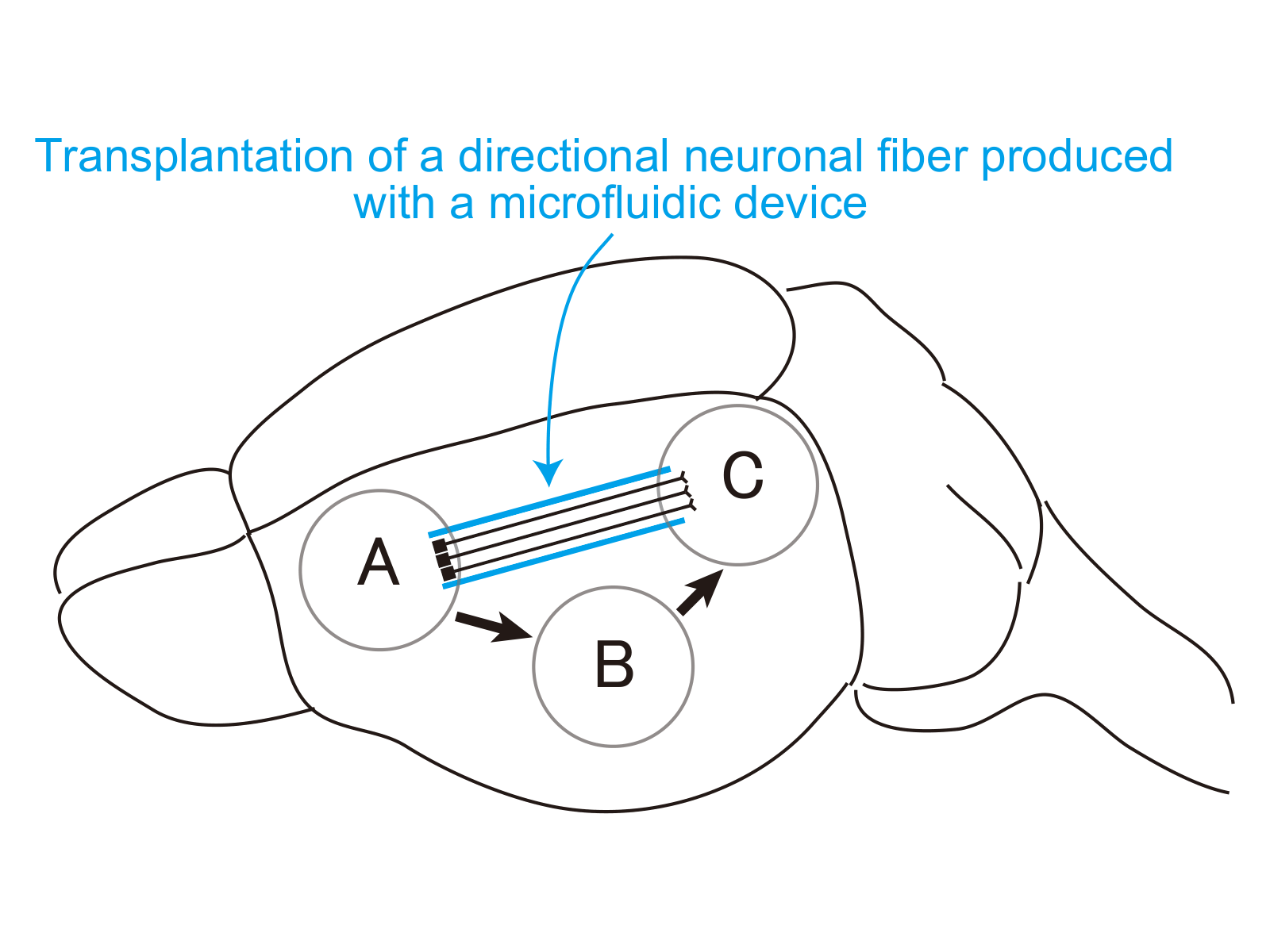
We also aim to use technologies for constructing new neural circuits in the brain as a constructive approach to understanding brain function. Previous studies have revealed the roles of existing neural circuits in brain activity, behavior, and cognition by manipulating their activity using techniques such as optogenetics. In contrast, we aim to investigate brain function by creating new neural circuits that do not naturally exist in the brain through the transplantation of directional neuronal fibers.
For example, we aim to gain a constructive understanding of primate-specific brain functions by constructing primate-characteristic neural circuits in the rodent brain and analyzing the resulting changes in neural activity, behavior, and cognitive function. We also aim to model the operating principles of these engineered neural circuits and translate them into computational algorithms. This approach could potentially provide new design principles for artificial intelligence.
03 Visualization of Neural Circuit Activity Using In Vivo Calcium Imaging
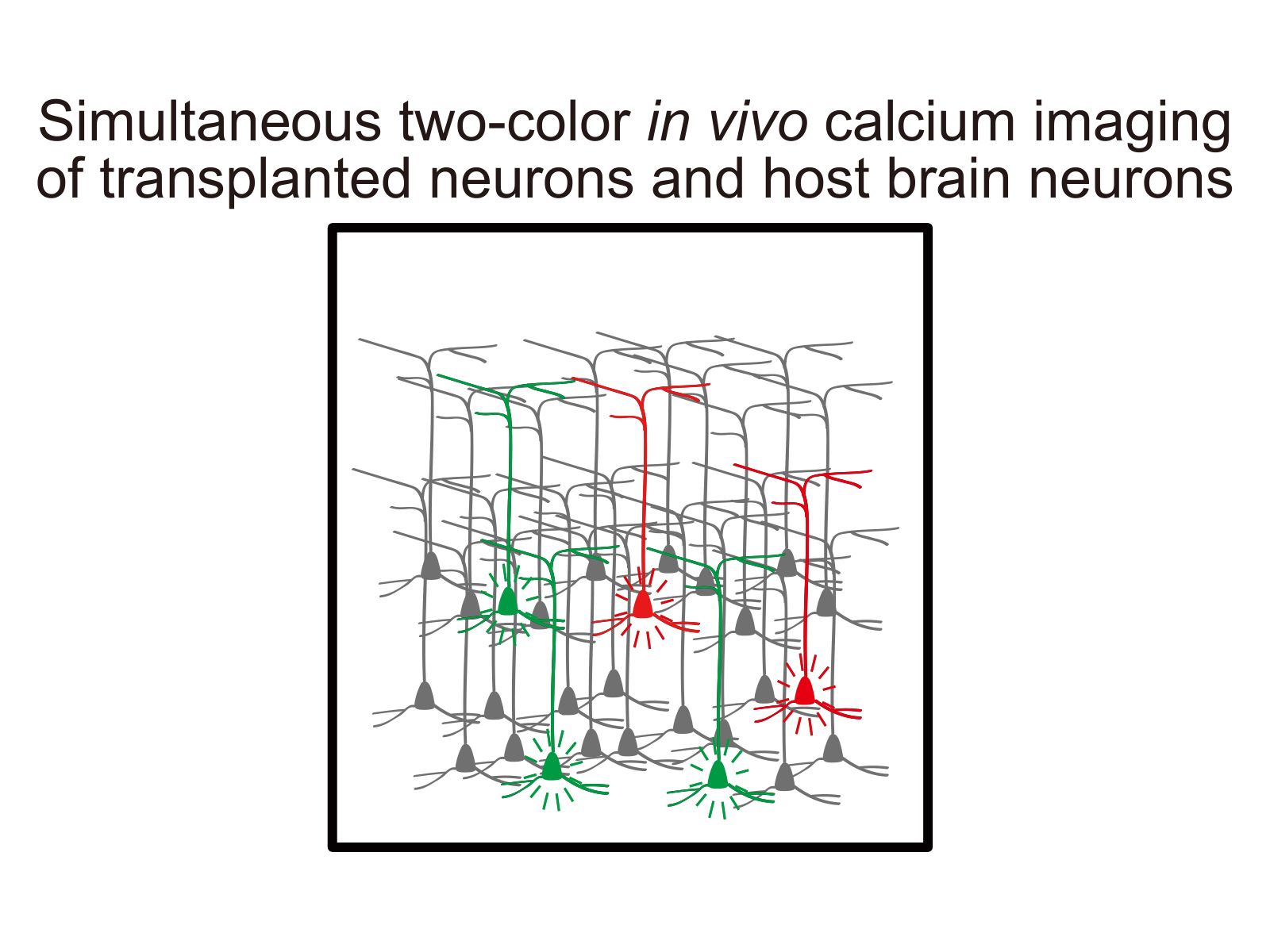
How does brain activity change as newly constructed neural circuits contribute to the recovery or enhancement of brain function? When neurons become active, their intracellular calcium concentration increases. Calcium imaging allows us to visualize these changes using fluorescent calcium indicators and repeatedly monitor the activity of large populations of the same neurons over extended periods.
Our laboratory uses a multi-point laser scanning confocal microscope for high-speed, wide-field, simultaneous two-color in vivo calcium imaging, as well as a two-photon excitation laser scanning microscope for simultaneous two-color in vivo calcium imaging in deep brain regions. These advanced imaging systems allow us to visualize the activity of both newly constructed and existing neural circuits.
Using these imaging technologies, we aim to understand how newly constructed neural circuits integrate into existing brain networks and contribute to the recovery or enhancement of brain function.