セミナー・講演会

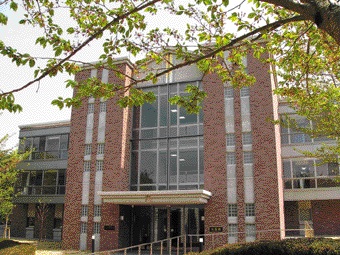
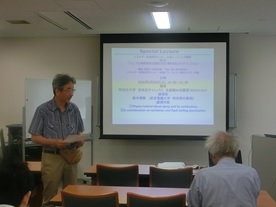
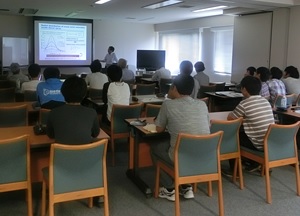
同志社大学 エネルギ―変換研究センターは技術セミナー・講演会を光喜館で開催しております。

開催場所  同志社大学 京田辺キャンパス 光喜館 3階 会議室

*前年度までの開催記録*

2024年度 ▶ 2023年度 ▶2022年度 2021年度 ▶2020年度 2019年度 2018年度 2017年度 2016年度以前

セミナー・講演会

 お知らせ 2019年度・2022年度は川西市生涯学習短期大学にて本センター教授による連続講義が開催されました。
         エネルギー変換工学科 (持続可能な社会発展のために-基礎論-)
          連続講義予定表       川西市生涯学習短期大学


2025年度 国際技術セミナー International Technical Seminar
講座名:ECRC New Year International Seminar 2026
日 時: 2026年1月8日(木) 14:00~18:00
会 場:光喜館 3階会議室 KK313&314
     対面 オンライン ハイブリッド開催
        *
PROGRAM ✶プログラム   ※講演は英語で開催いたします。

●14:00 Opening Speech Prof. M. Inaba (Director, ECRC, Doshisha University)

●14:10・Hiroshi Yamaguchi(Professor, Doshisha University, Japan)
     “What is liquid CO2 ? Flow and Heat Transfer”
Liquid CO2 can be produced by a vapor compression cycle. With that liquid CO2 can simultaneously store electric energy as internal thermal energy. When it is necessary, the thermal energy can be released as electric energy via mechanical energy, serving CO2 as energy storage. In the process of energy conversion from thermal to mechanical energy, convective heat transfer persists. The present work shows some sample cases and discusses a mechanism of the heat transfer of liquid CO2, which goes through convective and boiling heat transfer.

●14:30・Xiao-Dong Niu(Professor, College of Engineering, Shantou University, China)
     “Modular Quantum Circuit Framework for Lattice Boltzmann Simulation of Complex Flows”
In this talk, I will introduce a quantum lattice Boltzmann method (QLBM) for solving the Navier-Stokes systems for complex flows. The proposed quantum scheme effectively overcomes the mismatch between the nonlinear collision in the standard lattice Boltzmann method (LBM) and the linear quantum computing (QC) through a linearized non-equilibrium collision operator, and is successfully extended to the Navier-Stokes Systems by designing a modular circuit for density and velocity calculations. Most importantly, the present approach ensures the unitary of quantum algorithms while keeps the collision relaxation parameter adjustable for simulating flows with different Reynolds numbers. The accuracy and practicality of the proposed method are demonstrated by simulating two typical flows, including lid-driven and natural convection flows in a square cavity at different Reynolds and Rayleigh numbers, respectively. This work offers a practical application of QC-based LBM for complex fluid dynamics problems.

●14:50・Guan-Nan Xi(Professor, Nantong Institute of Technology, Nantong, China)
    “Research on a Hybrid Dehumidification System Integrating Heat Pump
     and Desiccant Polymer Module Technologies”
This paper investigates a hybrid dehumidification system that achieves high-efficiency energy recovery through the integration of a heat pump and a desiccant polymer module. The system fundamentally addresses limitations of conventional heat pump technologies under low-temperature conditions, including evaporator frosting/defrosting issues and regeneration challenges in desiccant modules. Furthermore, it demonstrates advantages in engineering implementation and maintenance convenience, making it particularly suitable for low-temperature refrigerated food environments with stringent humidity control requirements.

●15:30・Ning Zhu(Professor, Shizuoka Institute of Science and Technology, Shizuoka, Japan)
    “BDF Synthesis of Oil Derived from Insect by Using Microwave Irradiation”
BDF synthesis with high efficiency in terms of spreading sustainable energy is becoming more important. This study aims to realize highly efficient BDF synthesis based on the oil derived from insect by employing microwave irradiation. During the research, firstly oil was obtained through BSF(Black Soldier Fly), then BDF synthesis was conducted under different conditions. As a result, experimental conditions for BDF yield ratio over 95% were confirmed.
BDFの高効率合成は再生可能なエネルギーの普及において重要性がますます高まる。本研究はマイクロ波を用いる昆虫由来油脂の高効率BDF合成の実現を研究目的とするものである。研究では、ミズアブから油脂をえたうえ、種々な合成条件の下で合成を試みた結果、合成率95%に達した合成条件が明らかになった。

●15:50・Haruhiko Yamasaki(Associate Professor, Osaka Metropolitan University, Sakai, Japan)
     “Environmental Purification Technology Using Nonthermal Plasma”
This presentation will introduce the environmental purification technology using nonthermal plasma developed by our research group.

●16:10・Önder Kizilkan(Professor, Isparta University of Applied Sciences, Turkey)
     “Thermodynamic Screening of CO₂ Gas Cycle Configurations under Solar-Driven
     Low-Grade Thermal Energy with Dynamic Evaluation and Multi-Objective Optimization”
In this research, a comprehensive thermodynamic screening of numerous CO₂ gas cycle configurations—including single-flow, split-flow, and combined supercritical Brayton variants—was first conducted to identify suitable architectures for low-temperature solar applications. The comparative assessment covered recuperated, intercooling, reheating, pre-compression, partial-cooling, recompression, and multi-stage expansion layouts, evaluated based on energy and exergy performance. From this screening, the intercooling–reheating supercritical CO₂ Brayton cycle (IC–RH SCBC) emerged as the most promising configuration for solar-driven operation. Following the screening stage, a solar-assisted IC–RH SCBC integrated with evacuated-tube collectors was dynamically modelled and evaluated, using Isparta’s meteorological data to represent low-temperature solar conditions. Two collector groups (20 tubes in total) were employed for the heating and reheating processes. Results indicate that CO₂ temperatures can reach 265.32 °C, with an annual solar energy input of 17,697 kWh and an annual electricity generation of 547 kWh. Throughout most of the year, the system maintains above 1.5 kW of thermal input and over 0.3 kW of net power. The solar-based system achieves an overall energy efficiency of 3.1%, while the Brayton sub-cycle alone reaches 11.4%. To further enhance performance, a multi-objective optimization was conducted, improving the overall exergy efficiency and refining key operating parameters for low-temperature solar operation. These findings demonstrate that the IC–RH supercritical CO₂ Brayton configuration, when optimally tuned, offers a practical and effective pathway for low-temperature solar power generation.

●16:50・Xiang Li(Professor, Southern University of Science and Technology Shenzhen, China)
     “A fractional step lattice Boltzmann method for complex interfacial behaviors of ferrofluids”
To simulate the complex interfacial behaviors of ferrofluids, a magnetic field coupling fractional step lattice Boltzmann (FSLB) method is proposed. The present FSLB method employs the Chapman-Enskog expansion analysis to reconstruct the convection and diffusion terms of the macroscopic governing equations and uses the equilibrium and non-equilibrium distribution functions to establish the predictor-corrector step. The present FSLB method inherits the excellent performance of kinetic theory from the conventional lattice Boltzmann method and the good numerical stability from the matured fractional-step method. This work successfully performs the first rigorous numerical simulation on the Rosensweig instability, which accurately captures the spikes forming at the surface of a ferrofluid under an applied magnetic field. Moreover, for the first time we numerically reproduce the falling ferrofluid droplet impacted on the solid surface. Intriguingly, our simulation results reveal that the falling velocity of the ferrofluid droplet is slightly accelerated by the elongation, although the direction of the magnetic field is opposite to that of the gravity. All the results for the interfacial behavior and the magnetic interaction highlight the comparative stability, accuracy, and capability of the present magnetic field coupling FSLB method.

●17:10・Petter Nekså(Chief Scientist, SINTEF Energy Research, Trondheim, Norway)
     “Hard to abate industries – Technologies for emission abatement”
How to cut emissions from hard-to-abate industries and improve energy efficiency at the same time? Decarbonising energy-intensive industries is urgent, but complex. The presentation will present examples of technologies that may contribute to enable emission cuts and energy efficiency improvements in hard-to-abate sectors, such as heat pumps, integration of renewables, industry clustering, hydrogen and CCS implementation.

●17:30 Free discussion & Closing remarks Prof. Yamaguchi

  詳細PDF 案内ポスター
 【申込方法】 ①氏名 ②所属 ③電話番号 ④メール       
         をご記入の上rc-ene@mail.doshisha.ac.jpにご送付下さい。      
         案内ポスターのQRコードからもお申込みいただけます。
2025年度 国際技術セミナー International Technical Seminar
講座名: ”Utilisation and Control of Fluids in Energy Conversion: Stability and Flow Structure”
日 時: 2025年11月19日(水) 13:30~17:10 
会 場: 同志社大学 京田辺校地 恵道館 104教室 
        *
 特別講演 1 ”Thermoelectric convective flows and their applications to microgravity"
  Prof. Innocent Mutabazi(イノサン ムタバツィ)
  Laboratory of Waves and Complex Media, Le Havre University, France
  (教授, 波動・複雑媒質研究所,ル・アーブル大学, フランス)
【講演概要】温度勾配のもとに置かれた誘電流体には誘電泳動(DEP)力が働く。電気的実効重力(電気重力)を導入すると、このDEP力の非保存成分は熱浮力と見なすことができる。電気重力下での熱浮力作用の結果、臨界電圧が閾値を超えると国際宇宙ステーションなどの微小重力環境下においても誘電流体内部に熱対流が生じる。平行平板および同軸円筒キャパシタ内でのこの熱電気対流をパラボリックフライト無重力実験結果を交えて紹介する。

特別講演 2 "Flow instability and transitions in Taylor-Couette flow of non-colloidal suspensions"
 Dr. Changwoo Kang(チャンウ・カン)
 Department of Mechanical Engineering, Jeonbuk National University, South Korea
 (准教授, 全北大学 機械工学科, 韓国)
【講演概要】非コロイド性で浮力零の粒子の懸濁液の流れを、テイラー・クエット系において数値シミュレーションを用いて考える。シミュレーションは粒子相輸送のSB(suspension-balance)モデルとレオロジー的構成方程式に基づく。レイノルズ数増加とともに、クエット流(CCF)からリボン流(RIB),螺旋渦流(SVF),波状螺旋渦流(WSVF),波状渦流(WVF)と遷移すること、そして遷移のタイプ(超臨界,亜臨界)を明らかにする。

 特別講演 3 「Taylor-Couette flow in the narrow-gap limit」 
  永田雅人(ながた まさと)Kyoto University(京都大学,名誉教授)
【講演概要】円筒間間隔が小さな極限におけるテイラー・クエット流を考察する。この流れは両円筒の回転速度比 µ が1に近い値を取るときにのみ、回転平板クエット流あるいは平板クエット流に還元することができる。速度比 µ の値が 1 に近くない場合には、流れは軸対称あるいは非軸対称な擾乱に対して不安定であり、それぞれテイラー渦流、螺旋渦流が生じる。数値計算結果の既存実験との比較も行う。

  詳細PDF 案内ポスター
 【申込方法】 ①氏名 ②所属 ③電話番号 ④メール
         をご記入の上rc-ene@mail.doshisha.ac.jpにご送付下さい。
         案内ポスターのQRコードからもお申込みいただけます。

2025年度 技術セミナー「風エネルギー有効利用のための基礎研究」 
日 時: 2025年10月29日(水) 13:00~15:10 
会 場: 同志社大学 京田辺校地 光喜館3F会議室 KK313&314 
        *
特別講演 1 「流れのシミュレーション」 
  河村 哲也(お茶の水女子大学 名誉教授)
【講演概要】コンピュータの驚異的な進歩により、流体の基礎方程式でコンピュータを使って解くことにより流体現象を力学的に解明する数値流体力学(CFD)が急速に発展してきました。本講演ではCFDについて、お茶の水女子大学で卒論生や修論生が行った研究のいくつかを、流体力学やシミュレーションの基礎を交えて平易に解説します。

特別講演 2 「非定常運動する回転装置の数値シミュレーション」 
  桑名 杏奈(お茶の水女子大学 理学部情報科学科 准教授)
【講演概要】静止状態から流れを受けて回転を開始し、定常回転に至るまでの発電用回転装置の非定常運動を数値シミュレーションにより解析した。抗力で回転する卍型回転装置1基を対象とし、回転数の変化や可視化した流れ場の特徴を示し、その過渡挙動を明らかにした。

特別講演 3 「複数台の多段式垂直軸抗力型回転装置の数値シミュレーション」 
  皆川 晶子(お茶の水女子大学 理学部 研究員 産学連携)
【講演概要】独立して回転する複数台の多段式垂直軸抗力型回転装置の動特性を、非圧縮性ナビエ・ストークス方程式を用いた数値シミュレーションにより解析した。個々の装置周辺の領域を回転部分と静止部分に分割しそれらを数値的に接続する手法を用いて、装置形状や流れ方向の変化が装置周りの流れやトルクに与える影響を評価した。

◆ 研究員講演会 ◆

「クロスフロー風車のクラスター化に向けた風洞実験」 
  山本 耕平 (同志社大学 理工学研究科 流体力学研究室)
「クロスフローファンの基礎研究のための実験高精度化」
  権田 優輝 (同志社大学 理工学研究科 流体力学研究室)
「タンブリング風車の基本特性解明のための数値計算」
  水谷 歩夢 (同志社大学 理工学研究科 流体力学研究室)
「一様流中で回転する平板の固有振動数に関する実験」
  長谷川 慧司(同志社大学 理工学研究科 流体力学研究室)

 詳細PDF 案内ポスター
【申込方法】①氏名 ②所属 ③電話番号 ④メール
  をご記入の上rc-ene@mail.doshisha.ac.jpにご送付下さい。
  案内ポスターのQRコードからもお申込みいただけます。
2025年度 研究成果報告会(2024年度研究成果報告)
2025年度 エネルギー変換研究センター
「研究成果報告会2025」(2024年度研究成果報告)を以下日程で開催いたします。
エネルギー変換研究センターの教授陣も多く講師として講演いたしますのでご興味のある方はご参加をお待ちしております。

日 時: 2025年7月19日(土) 10:00~17:30 
会 場: 同志社大学 京田辺校地 光喜館3階会議室
        *
■ プログラム ■

SESSEION1
●10:00 開会の挨拶

●10:10 「亜鉛二次電池の開発(III)」 
      盛満正嗣(同志社大学 理工学部 教授)

●10:35 「実規模電力用変圧器におけるタンクおよびフレームの漂遊損評価」 
      高橋康人(同志社大学 理工学部 教授)

●11:00 「火花点火式水素エンジンの異常燃焼抑制に向けた噴射システムに関する研究」 
      日吉太一(同志社大学 理工学部 噴霧・燃焼工学研究室)

●11:25 「Well to Tank における自動車用カーボンニュートラル燃料の製造時コスト比較調査」 
      安見享祐(同志社大学 理工学部 噴霧・燃焼工学研究室)

●11:50 「LCA 解析による過熱水蒸気式ガス化および乾式メタン発酵ガス化を用いた地域内エネルギー生成システムの評価」 
      小澤清也(同志社大学 理工学部 噴霧・燃焼工学研究室)

12:15~13:15 休憩

SESSION 2
●13:15 「難燃性濃厚電解液を用いた擬固体リチウムイオン電池の開発」 
      土井貴之(同志社大学 理工学部 教授)

●13:40 「高温低加湿作動を目指した高活性白金系触媒開発(5)」 
      稲葉 稔(同志社大学 理工学部 教授)

●14:05 「Cu/SAPO触媒上での酸素でのメタン酸化によるH2,CO,ホルムアルデヒドの生成」 
      竹中 壮(同志社大学 理工学部 教授)

●14:30 「渦発生体下流における縦渦生成と伝熱促進」 
      田中海翔(同志社大学 理工学部 伝熱工学研究室)

14:55~15:05 休憩

●15:05 「誘電体バリア放電によるプラズマ触媒を用いたメタンの水蒸気改質」 
      山口侑能(同志社大学 理工学部 流体力学研究室)

●15:30 「円筒翼に関する数値解析と実験」 
      日尻昂希(同志社大学 理工学部 流体力学研究室)

●15:55 「壁流れの壁無しモデルにおける実空間構造と波数空間の局所フラックスベクトル」 
      高岡正憲(同志社大学 理工学部 教授)

●16:20 「Pdナノ膜における水素分布ならびに亜鉛金属電極を用いた電極間の可動イオン分布の解析」 
      白川善幸(同志社大学 理工学部 教授)

●16:45 「溶融塩電解による可視光応答型チタニアナノチューブの形成」 
      後藤 琢也(同志社大学 理工学部 教授)

●17:10 閉会の挨拶 (センター長)


  詳細PDF 案内ポスター

 【申込方法】 ①氏名 ②所属 ③電話番号 ④メールをご記入の上、下記メールにご送付下さい。
          rc-ene@mail.doshisha.ac.jp (エネルギー変換研究センター)
2025年度 技術セミナー「客員教授講演会」
講座名: 「客員教授講演会」
開催日時: 2025年6月27日(金) 13:10~16:30 
開催場所: 同志社大学 京田辺校地 光喜館3F会議室 KK313&314 
        *
特別講演 
小川英之(北海道大学 名誉教授 / 同志社大学 客員教授)
【講演題目1】「熱機関の基本とディーゼルエンジン」
熱機関の歴史と概要について概説したのち、外燃機関と内燃機関、往復式(容積型)と回転式(速度型)それぞれについて熱力学的見地から見た特徴を説明するとともに、ディーゼルエンジンについて燃焼を中心にその特徴および特性を解説する。

【講演題目2】「ディーゼルエンジンにおける燃料噴霧火炎の時空間分布最適化」
ディーゼルエンジンにおいて、燃焼室中段にリップを設けた噴霧上下分配型燃焼室を用い、第一の試みのピストン位相を考慮した二段階燃料噴射による双峰形部分予混合化燃焼について、次に第二の試みの噴孔を交互に異なる噴射角度で配置した千鳥噴孔配置燃料噴射ノズルの適用について、それぞれ検討した研究例を紹介する。

  詳細PDF 案内ポスター
 【申込方法】 ①氏名 ②所属 ③電話番号 ④メールをご記入の上rc-ene@mail.doshisha.ac.jpにご送付下さい。
         案内ポスターのQRコードからもお申込みいただけます。
2025年度 技術セミナー 「エネルギー変換システム基本要素の流れ」
 日 時: 2025年5月28日(水) 15:00~16:30 
 会 場: 同志社大学 京田辺校地 夢告館3階 301教室
 対象者: 学内者
        *
 特別講演 
和田 章弘(株式会社西島製作所 執行役員 品質マネジメント部 部長)
「立軸ポンプと吸込水槽に発生する渦」
ポンプの基礎知識のおさらいと、立軸ポンプと吸込水槽に発生する渦に関する業界および弊社の近年の取り組み、および渦発生予測に関する最近の解析事例などを紹介する。

研究員講演会 

 河野 幹太 (同志社大学 理工学研究科 流体力学研究室)
 「吸込水槽におけるLLS方を用いた空気吸込渦の分布実験」
自由表面を持つ吸込水槽において、水槽の形状や流入形態、ポンプの運転状態が不適当であると,空気吸込が発生し揚水能力の低下や振動または騒音の増加をもたらす。空気吸込が発生するとポンプの性能に大きな影響をもたらすため、自由表面を有する吸込水槽では空気吸込が発生しないことが不可欠の条件であり、吸込水槽の形状や寸法は、土地代や建設費と併せて上記の点を配慮して設計すべきである。本研究では、より空気吸込渦の理解を深める為、縦軸ポンプ吸込水槽を対象とする渦の軌道、分布描画アルゴリズムを用いて空気吸込現象の軌道、分布、発生頻度を調べる。
 杉山 亮介 (同志社大学 理工学研究科 流体力学研究室)
 「二次元ディフューザの流速分布一様化」
流体の速度エネルギーを圧力エネルギーに変換する機能を有するディフューザは、産業界において広く使用されている。本研究は、ディフューザ上流での幅方向の一様な流速分布を得ることを目的とし、様々な整流装置を用いて流速分布を測定する。
 浅井 平蔵 (同志社大学 理工学研究科 流体力学研究室)
「一様流中または地面近くを移動する楕円翼の揚抗力に関する数値的研究」
流体の速度エネルギーを圧力エネルギーに変換する機能を有するディフューザは、産業界において広く使用されている。本研究は、ディフューザ上流での幅方向の一様な流速分布を得ることを目的とし、様々な整流装置を用いて流速分布を測定する。

  詳細PDF 案内ポスター
 【申込方法】 ①氏名 ②所属 ③電話番号 ④メールをご記入の上rc-ene@mail.doshisha.ac.jpにご送付下さい。
   以下のQRコードからもお申込みいただけます。

 【連絡先】 同志社大学エネルギ―変換研究センター
         電話:0774-65-7756   E-mail:rc-ene@mail.doshisha.ac.jp