In our division, we aim to establish technology for producing neuronal fibers using tissue engineering techniques. We then aim to establish technology for transplanting neuronal fibers into the brain to create new neural circuits. Furthermore, using these technologies, we aim to achieve recovery and expansion of brain function through neural circuit construction. Regarding recovery of brain function, we hope to apply our approach to bypass treatments for brain injury sites and to regenerative medicine for neural circuits disrupted by neurological diseases. Regarding expansion of brain function, we hope to advance our understanding of the primate brain through a constructive approach — creating primate-specific neural circuits in the rodent brain. To elucidate changes in brain activity during functional recovery and expansion, we use a multi-point scanning confocal microscope and two-photon microscope.
2026.3.22
Dr. Tezuka (D5) received his doctoral degree.
2026.1.28
The doctoral dissertation public hearing of D5 Tezuka was held.
2025.8.27
Associate Professor Nishimura's research was featured in Doshisha University's owned media "D"iscover.
2025.8.8
A paper by D5 Tezuka was published in Frontiers in Neural Circuits.
2025.6.1
Sachiko Iwai joined our lab.
2025.2.28
D1 Numata received the Best Student Poster Award at the kickoff international symposium of the Academic Transformation Area (A) "Bio-transcendence".
2024.9.10
A Japanese review article by Associate Professor Nishimura was published in Hyomen to Shinkuu (Surface and Vacuum).
2024.9.6
D1 Numata received the Best Poster Award at the "Bio-transcendence" summer retreat. ☆
2024.8.30
Associate Professor Nishimura received the Encouragement Award from the Pharmaceutical Society of Japan (Pharmacological Division). ☆
2024.7.25
A review article by Associate Professor Nishimura was published in Frontiers in Neural Circuits.
2024.7.7
Associate Professor Nishimura received the Best Poster Award at the Clinical Pharmacy Forum 2024 / 32nd Clinical Pharmacy Symposium. ☆
2024.4.22
A paper by Associate Professor Osaki was published in Experimental Brain Research.
2024.2.14
A review article by Associate Professor Osaki was published in Journal of Rehabilitation Neurosciences.
2024.1.26
A paper by Associate Professor Nishimura was published in Regenerative Therapy.
2023.7.25
A paper by Associate Professor Nishimura was published in Neuropsychopharmacology Reports.
2023.6.14
A paper by Associate Professor Nishimura was published in STAR Protocols.
2023.3.1
A paper by Associate Professor Nishimura was published in Biological and Pharmaceutical Bulletin.
2023.1.1
A Japanese review article by Associate Professor Nishimura was published in Folia Pharmacologica Japonica.
2022.11.17
A paper by Associate Professor Nishimura was published in Stem Cell Reports.
2022.9.13
The Brain Science Retreat was held, organized by Nakashima as chair of the executive committee.
2022.6.29
A paper by Associate Professor Osaki was published in Nature Communications.
2022.4.1.
Nakashima (D1) joined the lab.
2022.4.1.
Associate Professor Nishimura joined the lab.
2022.4.1.
Associate Professor Osaki joined the lab.

A03 Systems Neuroscience Group
PI: Yoshito Masamizu
Co-I: Kaneyasu Nishimura
Co-I: Hironobu Osaki
This lab also serves as a common platform hub for the research area. Learn more
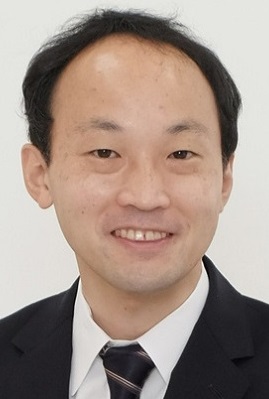
PI, Professor
Yoshito MASAMIZU
Yoshito MASAMIZU, Ph.D.
ymasamiz
mail.doshisha.ac.jp
 ResearchGate
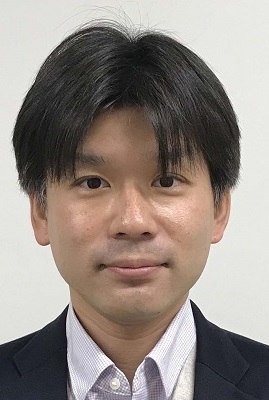
Associate Professor
Kaneyasu NISHIMURA
Kaneyasu NISHIMURA, Ph.D.
kannishimail.doshisha.ac.jp
ResearchGate
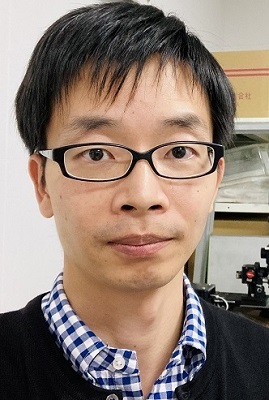
Associate Professor
Hironobu OSAKI
Hironobu OSAKI, M.D., Ph.D.
hosaki
mail.doshisha.ac.jp
ResearchGate
Yukie SEKIKAWA
Kotaro TEZUKA (Ph.D.)
(Received doctoral degree in FY2025; employed as a researcher in industry)
Associate Professor
Kaneyasu NISHIMURA
Kaneyasu NISHIMURA, Ph.D.
kannishimail.doshisha.ac.jp
ResearchGate
Neurons, once lost, cannot regenerate. However, if humans possessed the ability to regenerate lost neurons, some neurological diseases might have been overcome through our own healing capacity. How are the neurons that make up the brain formed, and how do they create networks with each other? By decoding this dynamic and complex process of neuronal formation and establishing technology to generate neurons, we believe we can contribute to maintaining people's health and to treating neurodegenerative diseases.
In the field of regenerative medicine, treatments to replenish lost neurons are being developed using cell transplantation with neural progenitor cells derived from pluripotent stem cells (human ES/iPS cells) and direct reprogramming that converts other brain cells directly into neurons. Using human iPS cells, we focus on Parkinson's disease and conduct fundamental research toward the functional and morphological regeneration of the lost midbrain dopaminergic neural circuits. We also develop novel therapeutic strategies from the perspective of drug discovery, reproducing molecular pathology of brain diseases by incorporating neural organoid preparation, genome editing, and imaging technologies.
1) Induction of neurons and neural organoids by recapitulating human brain development
2) Pathological modeling of neurodegenerative diseases and development of functional regenerative therapies
3) Generation of neurons through manipulation of cell fate
1) Gima S., Oe K., Nishimura K.† et al., Regen. Ther., 25, 229-237 (2024). †Corresponding author
2) Nishimura K. et al., Stem Cell Reports, 18 (1), 337-353 (2023).
3) Nishimura K.† et al., Stem cells Dev., 31 (11-12), 269-277 (2022). †Corresponding author
4) Amimoto N.*, Nishimura K.*,† et al., Stem Cell Res., 55, 102486 (2021). *Co-first author, †Corresponding author
5) La Manno G., Gyllborg D., Codeluppi S., Nishimura K. et al., Cell, 167 (2), 566-580 (2016).
6) Nishimura K. et al., Stem Cell Reports 6 (4), 511-524 (2016).
7) Samata B., Doi D., Nishimura K. et al., Nat. Commun., 7, 13097 (2016).
8) Nishimura K., et al., Stem Cells Transl. Med., 4 (8), 932-944 (2015).
Associate Professor
Hironobu OSAKI
Hironobu OSAKI, M.D., Ph.D.
hosaki
mail.doshisha.ac.jp
ResearchGate
Pain is an important signal that tells us of bodily dysfunction, as many patients visit hospitals complaining of pain. However, since "pain" is a phenomenon generated in the brain, treating the affected area alone often cannot eliminate it. By understanding the neural circuits that generate pain, we aim to develop approaches for intractable pain conditions.
· We elucidated how pain sensation is processed in the primary somatosensory cortex.
Osaki# et al., Nature Communications (2022) #co-corresponding author
· We elucidated how the thalamic reticular nucleus, an inhibitory nucleus in the sensory thalamus, selectively transmits specific signals to the cerebral cortex.
Osaki# et al., Neuroscience Res. (2018) #corresponding author
· (Collaborative research with Nihon University School of Dentistry, Dept. of Pharmacology) We provided a behavioral experimental system for verifying analgesic effects through neural activity control using quantitative pain evaluation.
Kobayashi, Osaki et al., PAIN (2025)
When brain neural circuits are damaged by stroke or other causes, the original function is lost, and various compensatory reactions occur in other brain regions. Capturing and understanding these changes is expected to provide knowledge useful for the development of neural circuit regeneration medicine. We also aim to develop methods that effectively harness such plasticity to further promote functional recovery.
Fukui*, Osaki*# et al., Scientific Reports (2020) *co-first author, #co-corresponding author
Ishii*, Osaki* et al., Experimental Brain Research (2024) *co-first author
Ishii*, Osaki* et al., Behavioural Brain Research (2021) *co-first author
Sato*, Itokazu*, Osaki* et al., eLife (2019) *co-first author
· Electrophysiology (OpenEphys)
· Ca2+ imaging / intrinsic signal imaging
· Optogenetics (stimulus position scanning by galvano mirror control, etc.)
· Behavioral experimental systems combining electronics and programming
We conduct research by appropriately combining these various techniques.
* Only publications from research conducted in this lab are listed. For other publications, please refer to each member's individual page.
Tezuka K.†, Osaki H.†, Nishimura K., Terada S., Matsuzaki M., Masamizu Y.*
Effective training procedure for a simultaneous bimanual movement task in head-fixed mice.
Frontiers in Neural Circuits, 19, 1633843 (2025).
†Equal contribution *Corresponding author
We successfully developed a method to effectively train bimanual task performance, which was previously difficult. This approach is expected to contribute to elucidating the bilateral hemispheric coordination mechanisms underlying bimanual motor learning.
Nishimura K.*, Osaki H., Tezuka K., Nakashima D., Numata S., Masamizu Y.
Recent advances and applications of human brain models.
Frontiers in Neural Circuits, 18, 1453958 (2024).
*Corresponding author
〒610-0394 Hoochikan 3F, 1-3 Tatara Miyakodani, Kyotanabe City, Kyoto Prefecture